Kona Coffee is derived from Coffee Arabica and is grown on the Big Island in Hawaii. Coffee Arabica is known for having low caffeine, low acidity & great flavor. Kona coffee is cultivated on the slopes of Hualalai and Mauna Loa in the Kona Districts. Only coffee grown in this area can be labeled Kona Coffee.
History of Coffee in Kona, Hawaii
Don Francisco de Paula Marin & Kamehameha planted the first coffee seeds in Hawaii in 1817. The plantings were a failure but in 1825, the first successful coffee orchard was established by John Wilkinson. Wilkinson died 2 years later, and others used cuttings and seeds from his small field to begin growing coffee in other areas on the island. This was just the beginning for Kona Coffee.
- 1842 – Government allowed for the payment of land taxes in coffee
- 1845 – Kona Coffee is first exported from Hawaii
- 1890 – Australian Ladybird beetle introduced to control the white scale
- 1892 – Japanese immigrants began to settle in Kona
- 1893 – Hawaiian Monarchy is overthrown
- 1899 – The world coffee market crashes
- 1917 – World War I causes increased demand for coffee
- 1918 – Brazil frost kills coffee crop, coffee prices soar
- 1929 – U.S. Stock Market Crashes
- 1941 – U.S. Enters World War II
- 1945 – End of World War II causes coffee prices to rise
- 1953 – Brazil frost kills coffee crop, coffee prices soar
- 1960 – Tourism takes off and now farmers must compete for workers
- 1984 – Kona Coffee Council is formed
- 1992 – A Kona blend must contain 10% Kona to be sold as a blend
- 1996 – Kona Kai Scandal
- 1999 – Kona Coffee begins being marketed online
- 2002 – Hawaii passes a truth-in-labeling law that requires coffee packages sold in Hawaii to show the origin and coffee percentage.
- 2010 – Coffee Berry Borer effects 90% of coffee farms
Cultivation Process – From Flower to Bean
Kona coffee is not only the best coffee that is grown in Hawaii; it is also one of the most sought after coffees in the world! There are many factors that contribute to the superb quality of Kona coffee. Not only does the cultivation process play an important role in the high-quality bean Kona Coffee produces, the climate and location are important factors as well.
The cultivation process has 5 phases:
- Growing
- Harvesting
- Processing
- Grading
- Roasting
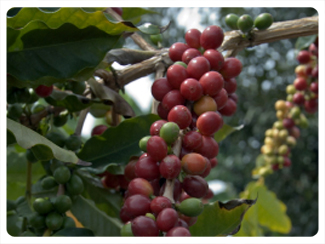
The growing phase begins when the Kona Coffee plant blossoms small white flowers, beginning in late January. Each tree will blossom flowers at different times. The flowers will turn into green coffee berries. And the green coffee berries will eventually turn to red coffee cherry.
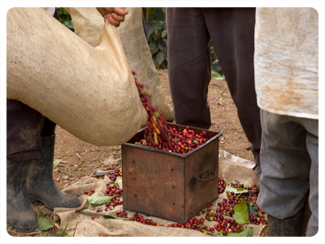
The harvesting phase begins when the ripened coffee cherry is handpicked by individuals and placed into a container; waiting to be processed. Each Kona Coffee plant can be picked 6-9 times during the harvesting phase. The average Kona Coffee tree can yield as much as 30 pounds of coffee cherry per year. About 8 pounds of coffee cherry makes one pound of roasted 100% Kona coffee.
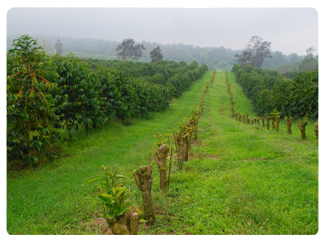
During the growing and harvesting phase, the Kona Coffee plant must be pruned regularly for 3 reasons. One, to help with the life expectancy of the coffee tree. Two, for easy harvesting. And three, to bear more coffee cherry per plant.
The processing phase begins approximately 24 hours after the coffee cherry has been harvested. The pulp is removed from the coffee cherry and placed into a tank to ferment for about 18 hours. After the fermentation period, the mucilage is removed by use of a mechanical demucilager, rinsed, then put on a hoshidana to dry. Further drying is done by mechanical forced-air drying machines, forming parchment coffee.
The grading phase begins when the parchment coffee is put into the huller and the parchment is removed. After the coffee bean has gone through the huller, the coffee is sorted by size, then by density to ensure quality and superiority.
In the roasting phase, 100 Kona Coffee is roasted and packaged.
Leave a Reply
You must be logged in to post a comment.